
What is Terpinolene?
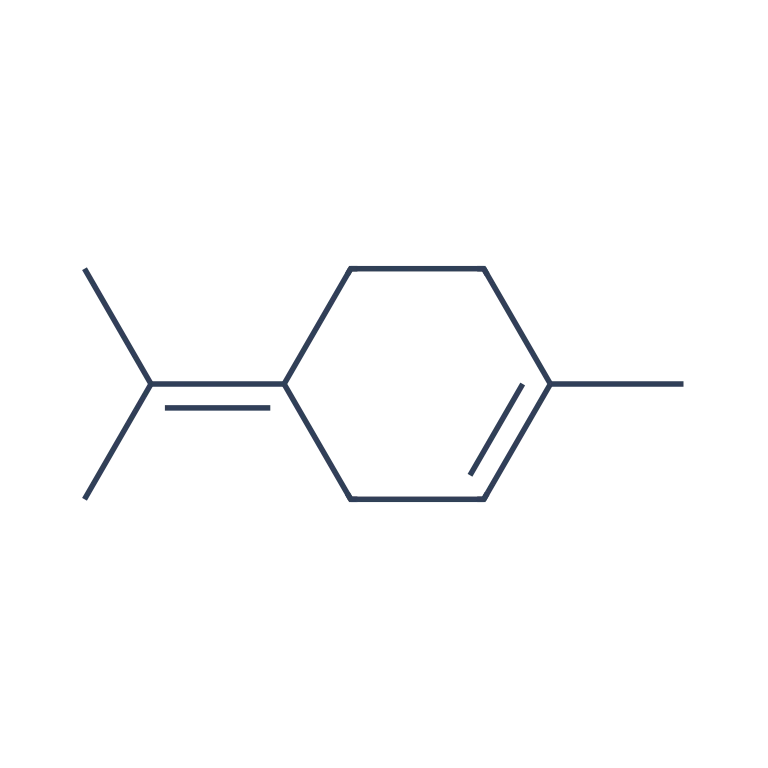
Terpinolene is a naturally occurring terpene with the molecular formula C10H16. Its structure contains one six-carbon ring and two carbon-carbon double bonds.
It is closely related to several other monoterpenes, including D-Limonene and the terpinenes. These compounds contain the same number and types of atoms, but the atoms and double bonds are arranged differently.
Reported effects
Research on Terpinolene is still mainly limited to animal and laboratory studies. Its sedating effect has been demonstrated after inhalation, while newer research also supports effects on pain and inflammation.
Sedating
Animal studiesInhaled Terpinolene reduced spontaneous activity in mice and also reduced activity caused by caffeine. It additionally increased the sleeping time produced by a sedative drug, supporting a direct sedating effect on the central nervous system.
Pain & inflammation
Animal studiesTerpinolene has reduced pain responses in animal models, including inflammatory and nerve-related pain. Recent research found reductions in mechanical, cold and heat sensitivity, while earlier studies also reported anti-inflammatory activity.
Molecular targets
The clearest molecular evidence for Terpinolene involves serotonin signalling. Research points particularly to 5-HT3 and 5-HT2A receptors, although the strength and type of interaction differ between these receptor types.
5-HT receptors
5-HT receptors respond to serotonin and are involved in processes such as mood, pain, nausea and nervous-system signalling.
Laboratory experiments found that Terpinolene interferes with the 5-HT3 receptor channel system and reduces serotonin-related responses. This provides direct evidence that 5-HT3 signalling can be affected by Terpinolene.
Animal studies also point to involvement of 5-HT2A receptors. Blocking these receptors reduced the pain-relieving effect of Terpinolene, suggesting that serotonin signalling contributes to its effects on pain.
The evidence is strongest for interaction with the 5-HT3 system. For 5-HT2A, current evidence shows that the receptor contributes to the observed effect, but does not yet prove strong direct binding by Terpinolene.