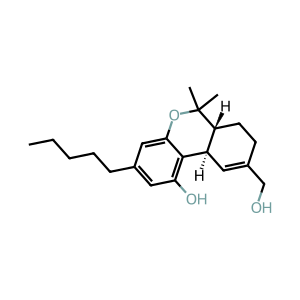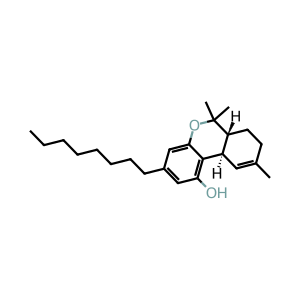
11-Hydroxy-THC

A psychoactive metabolite formed when the liver metabolizes Delta-9-THC, produced primarily via metabolism after oral cannabis consumption.
Metabolite
Intoxicating

CBC

A widely used non-intoxicating phytocannabinoid that acts as a selective CB2 receptor agonist rather than binding significantly to CB1.
Phytocannabinoid
Non-intoxicating

CBD

A naturally occurring, non-intoxicating cannabinoid that indirectly influences the endocannabinoid system and is widely studied for its potential therapeutic properties.
Phytocannabinoid
Non-intoxicating

CBDP

A naturally occurring phytocannabinoid isolated from cannabis, structurally identical to CBD but with a longer seven-carbon (heptyl) side chain instead of CBD’s five-carbon pentyl chain.
Phytocannabinoid
Non-intoxicating

CBDV

A non-intoxicating psychoactive phytocannabinoid found in cannabis, structurally a homolog of CBD with the five-carbon (pentyl) side chain shortened to a three-carbon (propyl) chain.
Phytocannabinoid
Psychoactive/non-intoxicating

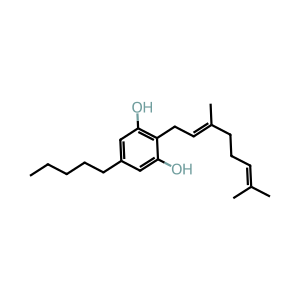
CBG

A non-intoxicating phytocannabinoid often called the “mother cannabinoid” because its acidic form (CBGA) is the biosynthetic precursor of THC, CBD, and CBC in the cannabis plant.
Phytocannabinoid
Psychoactive/non-intoxicating

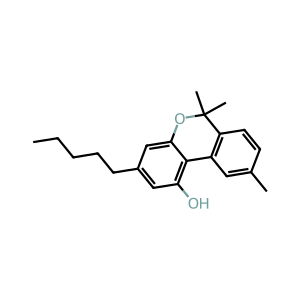
CBN

A mildly psychoactive phytocannabinoid that is formed mainly as an oxidative product of THC and is well-known for it’s sedating properties.
Phytocannabinoid
Mildly intoxicating

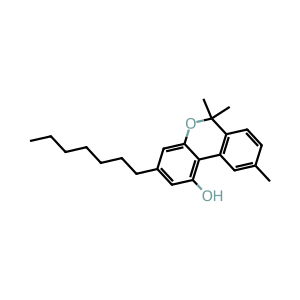
CBNP

A rare phytocannabinoid analog of CBN featuring a longer seven-carbon (heptyl) side chain instead of CBN’s five-carbon (pentyl) chain.
Phytocannabinoid
Not enough data

CBT

An oxidation product of THC found only in trace amounts in cannabis, structurally distinct from most phytocannabinoids due to its three hydroxyl groups.
Phytocannabinoid
Non-intoxicating

Delta-10-THC

A positional isomer of Δ9-THC produced through chemical isomerization of CBD, distinguished by the location of its carbon-carbon double bond.
Semi-synthetic cannabinoid
Not enough data

Delta-8-THC

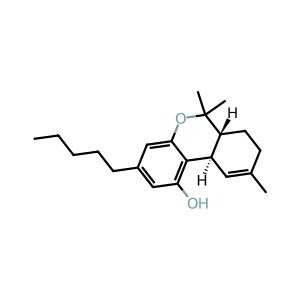
A naturally occurring, mildly psychoactive positional isomer of Δ9-THC found in trace amounts in the cannabis plant, though most commercial product is made semi-synthetically by isomerizing hemp-derived CBD.
Phytocannabinoid
Intoxicating

Delta-9-THC

The primary psychoactive phytocannabinoid in cannabis, responsible for the plant’s intoxicating “high”.
Phytocannabinoid
Intoxicating

H4CBD

A fully hydrogenated derivative of CBD produced by adding four hydrogen atoms to the CBD molecule via hydrogenation.
Semi-synthetic cannabinoid
Mildly intoxicating

HHC

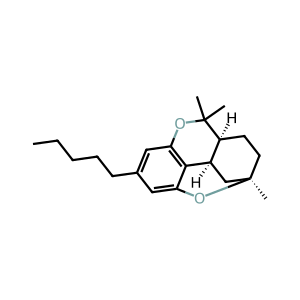
A hydrogenated derivative of THC produced by adding hydrogen atoms across the double bond of Delta-9-THC, commonly made semi-synthetically for commercial products.
Semi-synthetic cannabinoid
Intoxicating

HHCH

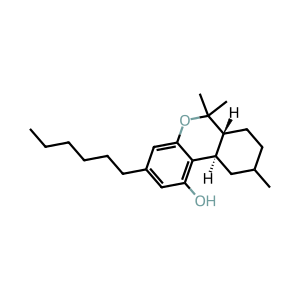
A semi-synthetic cannabinoid produced by hydrogenating THCH (tetrahydrocannabihexol), giving it a six-carbon (hexyl) side chain that boosts its receptor potency compared to standard HHC.
Semi-synthetic cannabinoid
Intoxicating

HHCP

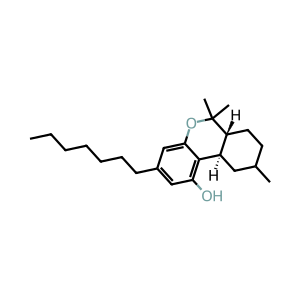
A semi-synthetic cannabinoid produced by hydrogenating THCP (tetrahydrocannabiphorol), giving it a seven-carbon (heptyl) side chain that boosts its receptor potency compared to standard HHC.
Semi-synthetic cannabinoid
Intoxicating

THCA

A naturally occurring, non-intoxicating cannabinoid acid produced directly by the cannabis plant that converts into psychoactive THC when heated through decarboxylation.
Phytocannabinoid
Non-intoxicating

THCB

A rare THC homologue with a four-carbon (butyl) side chain instead of THC’s five-carbon (pentyl) chain, occurring naturally in cannabis only in trace amounts.
Phytocannabinoid
Intoxicating

THCC

A phytocannabinoid found in cannabis, distinguished by an one-carbon (methyl) group replacing THC’s standard five-carbon (pentyl) side chain.
Phytocannabinoid
Non-intoxicating

THCE

A rare THC homologue with a two-carbon (ethyl) side chain instead of THC’s five-carbon (pentyl) chain, with little research interest because of the low expected receptor binding.
Synthetic cannabinoid
Not enough data

THCH

A potent THC homologue with a six-carbon (hexyl) side chain instead of THC’s five-carbon (pentyl) chain, occurring naturally in cannabis only in trace amounts.
Phytocannabinoid
Intoxicating

THCJD

A potent THC homologue with an eight-carbon (octyl) side chain instead of THC’s five-carbon (pentyl) chain, occurring naturally in cannabis only in trace amounts.
Phytocannabinoid
Intoxicating

THCP

A potent THC homologue with a seven-carbon (heptyl) side chain instead of THC’s five-carbon (pentyl) chain, occurring naturally in cannabis only in trace amounts.
Phytocannabinoid
Intoxicating

THCV

A THC homologue with a three-carbon (propyl) side chain instead of THC’s five-carbon (pentyl) chain, occurring naturally in cannabis in trace amounts.
Phytocannabinoid
Dose-dependent
Educational information only

This content does not constitute advice

All information in the Cannabinoid Knowledge Hub is provided solely for educational and scientific purposes. It does not constitute medical advice, usage advice, dosage guidance or instructions for mixing, combining or consuming substances.

Discussions of effects, interactions and risks are descriptive only and should not be interpreted as a recommendation or encouragement to use or combine any substance. Visitors are responsible for complying with all applicable laws and regulations in their country or jurisdiction. Nothing in the Knowledge Hub may be used to support illegal activity.

Read the full disclaimer