
CBDV
A non-intoxicating psychoactive phytocannabinoid found in cannabis, structurally a homolog of CBD with the five-carbon (pentyl) side chain shortened to a three-carbon (propyl) chain.
Last updated: 21 September 2026
CBDV at a glance
Naturally occurring
Yes
Psychoactive
Psychoactive/non-intoxicating
Cannabinoid type
Phytocannabinoid
Discovery year
1969
Also known as
Cannabidivarin, CAS 24274-48-4
Molecular formula
C19H26O2
CB1 receptor interaction
Agonist
CB2 receptor interaction
Agonist
What is CBDV?
CBDV is a non-intoxicating phytocannabinoid, a varin cannabinoid and the three-carbon homologue of CBD. It occurs naturally in Cannabis sativa, particularly in some landrace populations with relatively high CBD and low Delta-9-THC levels, and is usually accompanied by its acidic precursor CBDVA. In most modern cannabis varieties, CBDV is present only in relatively small amounts.
CBDV has the same basic structure as CBD but contains a three-carbon (propyl) side chain instead of the five-carbon (pentyl) side chain of CBD. This shorter side chain distinguishes the varin cannabinoids from their conventional five-carbon counterparts and changes the molecule’s chemical and biological properties.
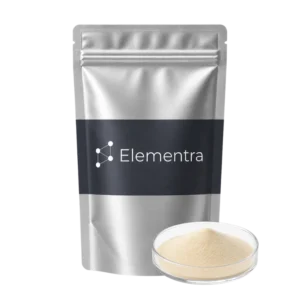
Commercial CBDV is generally produced through purification from cannabinoid extracts or synthesis and is commonly supplied as a high-purity isolate. At high purity it is a crystalline powder, typically off-white or pale yellow, with a fine powder consistency.
CBDV was first isolated from hashish in 1969 and was the first naturally occurring cannabinoid discovered with a three-carbon (propyl) side chain. Scientific interest increased substantially from the 2010s onward, particularly because of its potential neurological applications. CBDV has progressed into human clinical research, although evidence remains much less developed than for CBD.

How CBDV works in the human body
CBDV shows weak CB1 activity and no meaningful THC-like effects, while acting more clearly through CB2, TRP channels, GPR6, GPR55 and TLR4/MD2. These mechanisms may contribute to reduced seizure activity and lower inflammatory responses. CBDV is metabolised to 7-OH-CBDV and 7-COOH-CBDV.
CB1 receptor
The main cannabinoid receptor in the brain, responsible for THC’s intoxicating effects, has very low affinity for CBDV. One study measured a CB1 Ki of 14,7 nM for CBDV versus 4,3 nM for CBD, meaning CBD showed approximately 3.4x stronger CB1 binding affinity.
Functional activity is also weak. In a human-receptor signalling study, both CBDV and CBD had a CB1 EC50 above 10,000 nM, indicating very low potency. However, CBDV produced a maximum CB1 response of 68% versus 26% for CBD, approximately 2.6x greater. This shows that CBDV can produce a higher maximum CB1 response than CBD under some laboratory conditions despite binding more weakly. Neither compound showed meaningful THC-like CB1 activity, and CBDV produced no significant THC-like behavioural effects in the tested mice.
CB2 receptor
CB2 receptor
The main cannabinoid receptor in the immune system, involved in regulating immune cell activity and inflammatory responses. One study measured a CB2 Ki of 574.2 nM for CBDV versus 372.4 nM for CBD, meaning CBD showed approximately 1.5x stronger CB2 binding affinity.
However, receptor binding does not directly predict functional activity. In a human-cell CB2 signalling study, CBDV acted as a CB2 agonist with an EC50 of 12 nM, while CBD did not measurably activate CB2 in the same assay. This suggests that despite binding somewhat more weakly than CBD, CBDV can produce higher maximum CB2 response under some experimental conditions.
Other human-receptor experiments have also identified CBDV as a partial CB2 agonist. CB2 activation could influence immune and inflammatory signalling, but the importance of this mechanism in humans has not yet been fully established.
TRP ion channels
TRP channels help nerve cells respond to signals such as heat, irritation and changes in how easily cells become activated. CBDV activates and then rapidly desensitises TRPV1, TRPV2 and TRPA1, making the channels less responsive after initial activation. Reported activation EC50 values include 0.42 µM at TRPA1, 3.6 µM at TRPV1 and 7.3 µM at TRPV2. Animal and brain-tissue experiments suggest these mechanisms may help calm overactive nerve-cells, which could contribute to reduced seizure activity, although their importance in humans remains uncertain.
GPR6 receptor
GPR6 is a brain receptor with continuous background activity and is involved in movement and neural signalling. CBDV acts as an inverse agonist, reducing this baseline receptor activity. Laboratory research found a maximum EC50 response of approximately 2.40 µM. Reduced GPR6 activity could potentially influence movement-related and neurological signalling, but its importance and effects in humans remain unknown.
GPR55 receptor
GPR55 helps regulate calcium signalling and neuronal activity. CBDV triggered by GPR55’s signalling, making CBDV a GPR55 antagonist. Reduced GPR55 activity could potentially help calm overactive brain activity, although this has not been shown to produce a specific effect in humans.
TLR4 and MD2
TLR4 and MD2 are part of the immune system and help trigger inflammation when they detect potential threats. CBDV binds directly to MD2 and acts as a TLR4 antagonist, reducing this inflammatory response. Laboratory research found that CBDV could substantially reduce this activity at relatively low concentrations. In mice, it also strengthened morphine-related pain relief and reduced the development of morphine tolerance, although these effects have not been confirmed in humans.
Metabolism
CBDV is metabolised in humans to 7-OH-CBDV and subsequently 7-COOH-CBDV. 7-OH-CBDV has shown seizure-reducing effects in animal research and may therefore contribute to some of CBDV’s biological effects, although its importance in humans has not been established.
✓
Human safety status
No short term harm found, long term data not yet established
Controlled human studies have generally found CBDV to be well tolerated without established organ toxicity or other consistent physical harm. At higher doses, temporary side effects such as diarrhoea, nausea and sleepiness occurred more frequently in some studies. Long-term human safety remains insufficiently studied.
CBDV interactions with other compounds
CBDV can interact with other cannabinoids, common substances and medicines by changing their metabolism, blood exposure or biological effects. These interactions may increase, decrease or modify the effects of either compound, and can sometimes change how long those effects remain active in the body. Their strength and relevance can vary substantially depending on the specific combination, dose and route of administration.
Important disclaimer
This information is provided for educational and technical reference only. Interaction data can change as new research becomes available and may be incomplete or outdated. The real relevance of any interaction depends strongly on dose, route of administration, timing, formulation and individual metabolism. Readers should do their own research and consult a qualified healthcare professional before making decisions involving medicines, alcohol, nicotine, cannabinoids or other compounds. Elementra's products and information are intended for research, production and technical use only and are not intended for human consumption.
Medicines
Tolbutamide
Enzyme study
Tolbutamide blood exposure may increase
CBDV inhibits CYP2C9-mediated metabolism of tolbutamide in laboratory testing, with an apparent inhibitory concentration of about 4.3 µM. By slowing the breakdown of tolbutamide, CBDV could cause more of the medicine to remain in the bloodstream, potentially increasing or prolonging its glucose-lowering effect. The resulting increase in blood exposure has not yet been measured or confirmed in humans.
Related terms
Educational information only
This content does not constitute advice
All information in the Cannabinoid Knowledge Hub is provided solely for educational and scientific purposes. It does not constitute medical advice, usage advice, dosage guidance or instructions for mixing, combining or consuming substances.
Discussions of effects, interactions and risks are descriptive only and should not be interpreted as a recommendation or encouragement to use or combine any substance. Visitors are responsible for complying with all applicable laws and regulations in their country or jurisdiction. Nothing in the Knowledge Hub may be used to support illegal activity.
Read the full disclaimer