
CBC
A widely used non-intoxicating phytocannabinoid that acts as a selective CB2 receptor agonist rather than binding significantly to CB1.
Last updated: 21 September 2026
CBC at a glance
Naturally occurring
Yes
Psychoactive
Non-intoxicating
Cannabinoid type
Phytocannabinoid
Discovery year
1966
Also known as
Cannabichromene, CAS 20675-51-8
Molecular formula
C21H30O2
CB1 receptor interaction
Negligible activity
CB2 receptor interaction
Agonist
What is CBC?
CBC is a non-intoxicating phytocannabinoid and one of the better-known naturally occurring cannabinoids in Cannabis sativa. It is also commonly valued in cannabinoid blends for its balanced overall character and its ability to help create a smoother, more fluid consistency. In fresh cannabis, much of it is initially present as its acidic precursor CBCA, which can decarboxylate into CBC. CBC levels vary considerably between cannabis varieties and are often higher in younger plant material.
CBC has a distinctive chromene-type structure with a five-carbon (pentyl) side chain, making it structurally different from THC, CBD and CBG despite sharing the same cannabinoid origins. CBC occurs as two mirror-image forms, (+)-CBC and (-)-CBC. Natural cannabis can contain both, and which form predominates appears to vary between cannabis strains.
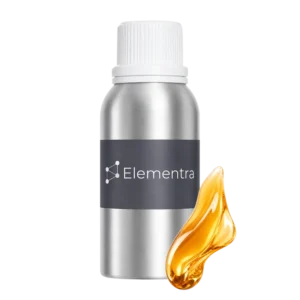
Commercial CBC is generally obtained through purification from cannabinoid extracts or produced synthetically and supplied as a high-purity distillate. It is typically light yellow to amber and has a very fluid, oil-like consistency, making it one of the most commonly encountered naturally occurring cannabinoids that remains liquid at room temperature. Exposure to UV light can gradually convert CBC into CBL.
CBC was first isolated and structurally identified from cannabis in 1966 and was historically considered one of the major phytocannabinoids alongside THC, CBD and CBG. Despite this early discovery, it has received considerably less scientific attention than THC or CBD. Research has increased in recent years, but human studies and detailed information about its safety and pharmacokinetics remain limited.

How CBC works in the human body
CBC interacts relatively weakly with the classical cannabinoid receptors but shows clearer activity at CB2 and several other channels, particularly TRPA1. It may also indirectly influence the endocannabinoid system by reducing cellular uptake of anandamide.
CB1 receptor
The main cannabinoid receptor in the brain, responsible for THC’s intoxicating effects. CBC has generally shown weak and inconsistent interaction with CB1. One commonly cited binding study reported a Ki of approximately 713 nM, compared with roughly 35 nM for Delta-9-THC, corresponding to approximately 0.05× the CB1 binding affinity of Delta-9-THC in that assay.
Functional studies provide stronger evidence that CBC has little meaningful CB1 activity. CBC failed to activate human CB1 in one study, producing only a negligible response. A later study found detectable CB1 activation by (-)-CBC only at the very high concentration of 30 µM, while (+)-CBC remained inactive. This weak functional activity is consistent with CBC being considered non-intoxicating rather than producing THC-like psychoactive effects.
CB2 receptor
The main cannabinoid receptor in the immune system, involved in regulating immune cell activity and inflammatory responses. CBC binds CB2 more strongly than CB1, although still weak compared other cannabinoids. In one direct binding study, CBC showed a Ki of approximately 256 nM, compared with approximately 8.5 nM for Delta-9-THC, corresponding to approximately 0.03× the CB2 binding affinity of Delta-9-THC in that assay.
Despite this lower binding affinity, functional studies indicate meaningful CB2 agonism. In one human CB2 assay, CBC reached approximately 52% of the maximum response produced a full agonist, compared with approximately 22% for Delta-9-THC. CBC therefore produced approximately 2.4× the maximal CB2 response of Delta-9-THC in this assay. More recent research found that (-)-CBC activated human CB2 with an EC50 of approximately 1.5 µM and reached about 60% of the full agonist response, while (+)-CBC remained largely inactive. CBC therefore appears capable of relatively strong CB2 signalling despite its comparatively low binding affinity, although the biological importance of this activity has not been established clinically in humans.
TRPA1
TRPA1 is an ion channel involved in sensing chemical irritation, temperature and pain-related signals. CBC is a comparatively potent TRPA1 agonist, with an EC50 of approximately 90 nM reported in some TRPA1 channels. CBC can subsequently desensitize the channel, with an IC50 of approximately 370 nM reported for inhibition of a later TRPA1 response.
Newer experiments using human TRPA1 confirmed that both CBC enantiomers can activate the channel. At 30 µM, (-)-CBC produced approximately 50% of the response of the reference agonist cinnamaldehyde, while (+)-CBC produced approximately 38%. TRPA1 therefore appears to be one of the better-supported non-cannabinoid-receptor targets of CBC, although its contribution to CBC’s effects in humans remains uncertain.
TRPV1
TRPV1 is an ion channel involved in sensing heat, chemical irritation and pain-related signals. CBC acts as a TRPV1 agonist, with a reported EC50 of approximately 24.2 µM in human TRPV1-expressing cells. However, its efficacy was relatively low, producing less than 10% of the maximal calcium response generated by ionomycin.
CBC therefore interacts with TRPV1 considerably less potently than with TRPA1. This interaction may contribute to effects on sensory and pain-related signalling, but the concentrations required are relatively high and its physiological importance in humans has not been established.
TRPV3
TRPV3 is a temperature-sensitive ion channel expressed particularly in the skin and other tissues, where it participates in temperature sensing, sensory signalling and regulation of cellular responses. CBC has been reported to activate TRPV3 channels with an EC50 of approximately 1.9 µM.
CBC can also desensitize TRPV3 after activation, although this only occurs at substantially higher concentrations. These findings suggest that CBC can modulate TRPV3 signalling, but the physiological importance of this interaction has not been established in humans.
TRPV4
TRPV4 is a broadly expressed ion channel involved in sensing temperature, mechanical forces and changes in the cellular environment. CBC activates TRPV4 channels with an EC50 of approximately 0.6 µM, making TRPV4 one of the more sensitive TRP targets identified for CBC.
In the same experimental system, CBC produced about 23% of the maximal calcium response and desensitized subsequent TRPV4 activation with an IC50 of approximately 9.9 µM. These findings demonstrate direct modulation of TRPV4, but they do not yet establish a clinically relevant effect in humans.
PPARγ
PPARγ is a nuclear receptor that regulates gene expression and is involved in processes including metabolism, cellular differentiation and inflammatory signalling. CBC has been identified as a PPARγ agonist, although its activity appears relatively weak. A concentration-response study did not reach a maximal effect at the highest CBC concentration tested of 25 µM, meaning an exact EC50 could not be established and is considered greater than 25 µM.
CBC was less potent at PPARγ than Delta-9-THC in the same study, for which an EC50 of approximately 21.2 µM was reported. PPARγ activation could contribute to some of CBC’s effects on cellular and inflammatory signalling, but the relatively high concentrations required and lack of direct human evidence make the physiological relevance of this mechanism unknown.
Anandamide uptake
Anandamide is one of the body’s main endogenous cannabinoids and can activate both CB1 and CB2 receptors. Its signalling is partly regulated by cellular uptake and subsequent metabolism. CBC inhibits cellular uptake of anandamidewith an IC50 of approximately 12.3 µM.
In the same assay, CBD showed an IC50 of approximately 25.3 µM, meaning CBC inhibited anandamide uptake at roughly half the concentration required for CBD. By slowing cellular removal of anandamide, CBC could theoretically increase or prolong local endocannabinoid signalling without directly activating CB1 itself. However, this mechanism has been demonstrated in cell models and its importance in humans remains unknown.
Metabolism
Human metabolism of CBC has only recently been characterized in detail. Laboratory studies using human cytochrome P450 enzymes identified 8-hydroxy-CBC and 6′,7′-epoxy-CBC as two major oxidative metabolites, together with smaller amounts of 1″-hydroxy-CBC
CBC can additionally undergo glucuronidation through several enzymes. Human pharmacokinetic data such as absolute bioavailability, elimination half-life and circulating metabolite concentrations remain poorly defined.
✓
Human safety status
No direct data, considered likely safe based on similar cannabinoids
CBC has not yet been studied as an isolated compound in controlled human safety trials. Limited human exposure data are available from a Phase 1 study in which healthy participants received up to approximately 26.4 mg of CBC per day for seven days as part of an oral product also containing CBD and Delta-9-THC. No serious adverse events were reported, but because several cannabinoids were administered together, the safety of CBC itself cannot be determined from this study.
CBC is non-intoxicating and shows very weak CB1 activity, and current evidence has not identified a specific safety concern suggesting unusually high toxicity. Its short-term safety profile is therefore considered likely to resemble that of other non-intoxicating phytocannabinoids, but direct or long-term safety data for isolated CBC are still lacking.
CBC interactions with other compounds
CBC can interact with other cannabinoids, common substances and medicines by changing their metabolism, blood exposure or biological effects. These interactions may increase, decrease or modify the effects of either compound, and can sometimes change how long those effects remain active in the body. Their strength and relevance can vary substantially depending on the specific combination, dose and route of administration.
Important disclaimer
This information is provided for educational and technical reference only. Interaction data can change as new research becomes available and may be incomplete or outdated. The real relevance of any interaction depends strongly on dose, route of administration, timing, formulation and individual metabolism. Readers should do their own research and consult a qualified healthcare professional before making decisions involving medicines, alcohol, nicotine, cannabinoids or other compounds. Elementra's products and information are intended for research, production and technical use only and are not intended for human consumption.
Cannabinoids
Delta-9-THC
Animal study
Delta-9-THC brain exposure increases
CBC increased Delta-9-THC concentrations in the brains of mice when the cannabinoids were given together. Higher CBC doses also increased several Delta-9-THC-related effects, including pain reduction and hypothermia. Delta-9-THC blood concentrations were not significantly increased, suggesting that CBC may alter how Delta-9-THC reaches or remains in brain tissue. The relevance of this interaction in humans is unknown.
Medicines
Capsaicin
Cell study
Capsaicin-induced nerve signalling decreases
CBC directly reduced the response of sensory neurons to capsaicin in laboratory testing. Capsaicin-induced calcium influx was completely blocked in about 48% of responsive neurons and reduced in many others. This suggests that CBC can weaken capsaicin-related pain signalling, but the interaction has not yet been confirmed in humans.
Hexobarbital
Animal study
Sedative duration changes with CBC exposure
A single dose of CBC prolonged the sedative effect of hexobarbital in mice. However, after CBC had been given daily for seven days, the hexobarbital response became shorter than in mice not receiving CBC. This suggests that acute and repeated CBC exposure can affect hexobarbital differently. The interaction has not been studied in humans.
Barbital
Animal study
Sedative duration can increase
A single dose of CBC prolonged the sedative effect of barbital in mice. After CBC was given daily for seven days, this prolonging effect was no longer observed, suggesting that the interaction may weaken with repeated CBC exposure. The interaction has not been studied in humans.
Zoxazolamine
Animal study
Effect duration changes with CBC exposure
A single dose of CBC prolonged the effects of zoxazolamine in mice. After seven days of repeated CBC administration, the response instead became shorter than in mice not receiving CBC. This suggests that acute and repeated CBC exposure can affect zoxazolamine in opposite directions. The interaction has not been studied in humans.
Related terms
Educational information only
This content does not constitute advice
All information in the Cannabinoid Knowledge Hub is provided solely for educational and scientific purposes. It does not constitute medical advice, usage advice, dosage guidance or instructions for mixing, combining or consuming substances.
Discussions of effects, interactions and risks are descriptive only and should not be interpreted as a recommendation or encouragement to use or combine any substance. Visitors are responsible for complying with all applicable laws and regulations in their country or jurisdiction. Nothing in the Knowledge Hub may be used to support illegal activity.
Read the full disclaimer