
CBT
An oxidation product of THC found only in trace amounts in cannabis, structurally distinct from most phytocannabinoids due to its three hydroxyl groups.
Last updated: 21 September 2026
CBT at a glance
Naturally occurring
Trace amounts
Psychoactive
Non-intoxicating
Cannabinoid type
Phytocannabinoid
Discovery year
1966
Also known as
Cannabitriol, CAS 11003-36-4
Molecular formula
C21H30O4
CB1 receptor interaction
Negligible activity reported
CB2 receptor interaction
Not enough data
What is CBT?
CBT is a rare non-intoxicating phytocannabinoid found naturally in Cannabis sativa. It occurs only as a minor cannabinoid in the plant, but can become considerably more concentrated in some crystal-resistant extracts. Unlike many better-known cannabinoids, CBT does not belong to the THC or CBD homologue families.
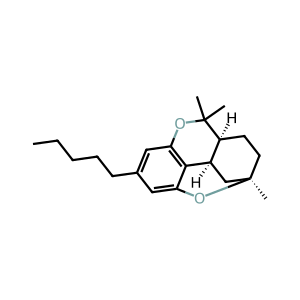
CBT has a distinctive compact tetracyclic structure with a five-carbon (pentyl) side chain and an internal ether bridge. Natural CBT is unusual because it occurs as a mixture of two mirror-image forms, (+)-CBT and (-)-CBT, in approximately equal proportions.
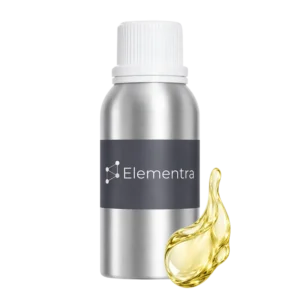
Commercial CBT is generally obtained through purification from cannabinoid extracts or produced synthetically and supplied as a high-purity oil. It is generally transparent and has an unusually fluid, oil-like consistency, making it one of the least viscous naturally occurring cannabinoids commonly available as a concentrate. CBT also strongly resists crystallisation and normally remains highly liquid at room temperature.
CBT was isolated from Lebanese cannabis in the early 1970s and formally reported as a naturally occurring cannabinoid in 1974. It received very little scientific attention for decades, but more recent research has clarified its structure and the existence of its two mirror-image forms. Research remains extremely limited, particularly regarding its human effects, pharmacokinetics and broader biological relevance.
How CBT works in the human body
CBT shows no meaningful CB1 activation, making THC-like intoxication unlikely. Its CB2 activity remains unknown, while computational research suggests possible interactions with Estrogen receptor alpha and aromatase, which could theoretically reduce estrogen signalling and production. CBT metabolism in humans is poorly understood, although CBT formation from THC metabolism is likely.
CB1 receptor
The main cannabinoid receptor in the brain, responsible for THC’s intoxicating effects, does not appear to be meaningfully activated by CBT. In a human CB1 receptor signalling study, CBT produced no significant Gi/GIRK activation even at 20 µM, whereas Delta-9-THC clearly activated the pathway. Therefore research supports no THC-like CB1 effects or intoxication from CBT.
CB2 receptor
The main cannabinoid receptor in the immune system, involved in regulating immune cell activity and inflammatory responses. No reliable CBT-specific data has been established. Reviews of minor-cannabinoid pharmacology continue to describe CBT pharmacology as largely unknown. Immune or inflammatory effects through CB2 therefore cannot currently be predicted.
Estrogen receptor alpha
Estrogen receptor alpha, helps cells respond to estrogen and influences processes such as gene activity and cell growth. Computational research predicts CBT could act as an ERα antagonist, meaning it may reduce estrogen-driven receptor activity. However, this interaction has not been confirmed experimentally or in humans, so any hormonal effects remain theoretical.
Aromatase
Aromatase is an enzyme involved in estrogen production. Computational research predicts that CBT may bind to and inhibit aromatase, which would potentially reduce estrogen production. However, since this has not been directly researched, exact effects remains theoretical.
Metabolism
CBT has been reported as a a likely THC-derived metabolite in humans, meaning the body possibly forms it following THC exposure. How administered CBT itself is absorbed, further metabolised or eliminated has not been characterised, and no active downstream CBT metabolites are established.
✓
Human safety status
No direct data, considered likely safe based on similar cannabinoids
No controlled human safety studies or dedicated toxicology studies have been conducted with isolated CBT. Acute and long-term exposure remain insufficiently established, and no specific organ toxicity or other consistent physical harm has been established. A reliable human safety profile cannot currently be determined.
CBT interactions with other compounds
CBT can interact with other cannabinoids, common substances and medicines by changing their metabolism, blood exposure or biological effects. These interactions may increase, decrease or modify the effects of either compound, and can sometimes change how long those effects remain active in the body. Their strength and relevance can vary substantially depending on the specific combination, dose and route of administration.
Important disclaimer
This information is provided for educational and technical reference only. Interaction data can change as new research becomes available and may be incomplete or outdated. The real relevance of any interaction depends strongly on dose, route of administration, timing, formulation and individual metabolism. Readers should do their own research and consult a qualified healthcare professional before making decisions involving medicines, alcohol, nicotine, cannabinoids or other compounds. Elementra's products and information are intended for research, production and technical use only and are not intended for human consumption.
Medicines
Capsaicin
Cell study
Capsaicin-induced nerve signalling decreases
CBT directly reduced the response of sensory neurons to capsaicin in laboratory testing. In the presence of CBT, capsaicin-induced calcium influx was completely blocked in about 71% of capsaicin-sensitive neurons, while the remaining responsive neurons generally showed reduced responses. The exact mechanism and relevance in humans have not yet been established.
Related terms
Educational information only
This content does not constitute advice
All information in the Cannabinoid Knowledge Hub is provided solely for educational and scientific purposes. It does not constitute medical advice, usage advice, dosage guidance or instructions for mixing, combining or consuming substances.
Discussions of effects, interactions and risks are descriptive only and should not be interpreted as a recommendation or encouragement to use or combine any substance. Visitors are responsible for complying with all applicable laws and regulations in their country or jurisdiction. Nothing in the Knowledge Hub may be used to support illegal activity.
Read the full disclaimer