
CBDP
A naturally occurring phytocannabinoid isolated from cannabis, structurally identical to CBD but with a longer seven-carbon (heptyl) side chain instead of CBD’s five-carbon pentyl chain.
Last updated: 21 September 2026
CBDP at a glance
Naturally occurring
Trace amounts
Psychoactive
Non-intoxicating
Cannabinoid type
Phytocannabinoid
Discovery year
2019
Also known as
Cannabidiphorol, CBD-C7, CBD-heptyl, CAS 55824-13-0
Molecular formula
C23H34O2
CB1 receptor interaction
Negative allosteric modulator
CB2 receptor interaction
Antagonist
What is CBDP?
CBDP is a rare non-intoxicating phytocannabinoid and the seven-carbon homologue of CBD. It occurs naturally in Cannabis sativa in trace amounts, with its acidic precursor CBDPA also present in the plant. So far, CBDP has only been identified in very small concentrations, and it is still unclear how widely it occurs across different cannabis chemotypes.
CBDP has the same basic structure as CBD but contains a seven-carbon (heptyl) side chain instead of the five-carbon (pentyl) side chain of CBD. This longer side chain alters its chemical and biological properties while retaining the characteristic CBD-type structure. Unlike THCP, the longer side chain does not appear to make CBDP more intoxicating than its five-carbon counterpart.
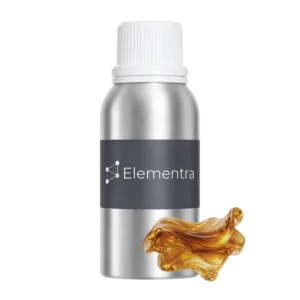
Because natural concentrations are extremely low, commercial CBDP is generally produced synthetically rather than extracted from cannabis. It is typically supplied as a high-purity, light-yellow distillate. Its consistency is relatively fluid for a cannabinoid distillate: not thin or watery, but mobile enough to flow noticeably more than remaining highly resinous or solid.
CBDP was first isolated and identified from the Italian medicinal cannabis variety FM2 in 2019 alongside THCP. Scientific research remained extremely limited until dedicated pharmacological studies began appearing more recently. Research is still at an early stage, with no human studies and major gaps regarding its effects, safety and pharmacokinetics.

How CBDP works in the human body
CBDP shows relatively weak direct activity at CB1 and CB2, but research indicates that it can modify CB1 signalling through modulation. Additional laboratory findings suggest interactions with μ-opioid, 5-HT1A receptors and the dopamine D2 receptor, giving CBDP a partly distinct pharmacological profile from CBD.
CB1 receptor
The main cannabinoid receptor in the brain, responsible for THC’s intoxicating effects, has relatively low direct affinity for CBDP. Based on reported binding values, CBDP binds CB1 approximately 17x weaker than Delta-9-THC. CBDP also shows only weak direct receptor activation, meaning it does not activate CB1 in the same way as Delta-9-THC or THCP.
Instead, research identifies CBDP as a negative allosteric modulator of CB1. Rather than occupying the primary site used by THC and endocannabinoids, CBDP interacts with secondary binding sites that can modify how strongly the receptor responds to other molecules.
In mice, CBDP given alongside Delta-9-THC reduced disruption in memory and recognition tests while largely preserving THC-related paid-reducing effects. This suggests CBDP may selectively modify some CB1-mediated effects rather than simply blocking the receptor. These findings have not been confirmed controlled human research.
CB2 receptor
The main cannabinoid receptor in the immune system, involved in regulating immune cell activity and inflammatory responses. CBDP showed weak CB2 antagonist activity, reaching approximately 23% of the reference antagonist response at the highest tested concentration, compared with about 33% for CBD in the same assay. This suggests that CBDP has somewhat weaker functional CB2 antagonism than CBD. Whether this difference produces meaningful effects on immune or inflammatory signalling in humans is unknown.
μ-opioid receptor
The μ-opioid receptor contributes to pain signalling, reward and responses to opioids. CBDP acts as a positive allosteric modulator, meaning it can enhance receptor signalling triggered by another molecule without directly activating the receptor itself.
In research, CBDP increased the met-enkephalin-related receptor response by approximately 37%. Because positive allosteric modulation can make μ-opioid receptors respond more strongly to other agonists, CBDP could potentially enhance the effects of opioids. However, this has only been demonstrated with met-enkephalin in laboratory research, and enhancement of opioids by CBDP has not been established in direct human research.
5-HT1A receptor
The 5-HT1A serotonin receptor helps regulate mood, stress responses, emotional processing and serotonin release. CBDP shows weak agonist activity at this receptor. While stronger 5-HT1A activation is associated with anxiolytic and antidepressant mechanisms, CBDP’s activity is weak and has only been demonstrated in laboratory receptor assays. Calming, anxiolytic or antidepressant effects have therefore not been verified in direct CBDP research.
Metabolism
CBDP metabolism has not been experimentally characterised. Based on CBD metabolism, hydroxylated, oxidised and conjugated CBDP metabolites are plausible, but no specific CBDP metabolite has yet been confirmed.
✓
Human safety status
No direct data, considered likely safe based on similar cannabinoids
No human clinical trials or toxicology studies exist for CBDP. Available evidence comes only from cell-based receptor assays and a single mouse study examining THC co-administration, with no human exposure data. Its likely safety profile is inferred from CBD, given broadly similar receptor behaviour, but this inference has not been directly confirmed, and a reliable human safety profile cannot currently be established.
CBDP interactions with other compounds
CBDP can interact with other cannabinoids, common substances and medicines by changing their metabolism, blood exposure or biological effects. These interactions may increase, decrease or modify the effects of either compound, and can sometimes change how long those effects remain active in the body. Their strength and relevance can vary substantially depending on the specific combination, dose and route of administration.
Important disclaimer
This information is provided for educational and technical reference only. Interaction data can change as new research becomes available and may be incomplete or outdated. The real relevance of any interaction depends strongly on dose, route of administration, timing, formulation and individual metabolism. Readers should do their own research and consult a qualified healthcare professional before making decisions involving medicines, alcohol, nicotine, cannabinoids or other compounds. Elementra's products and information are intended for research, production and technical use only and are not intended for human consumption.
Cannabinoids
Delta-9-THC
Animal study
Recognition performance improves relative to Delta-9-THC alone
CBDP altered one cognitive effect of Delta-9-THC when the two cannabinoids were given together in mice. At 10 mg/kg of each cannabinoid, the combination produced significantly better recognition-memory performance than Delta-9-THC alone. CBDP did not significantly change Delta-9-THC’s locomotor suppression, hypothermia, catalepsy or hot-plate analgesic effect at these doses. CBDP’s negative allosteric modulation of CB1 may contribute to the cognitive interaction, but the exact mechanism has not been established and the effect has not been confirmed in humans.
Related terms
Educational information only
This content does not constitute advice
All information in the Cannabinoid Knowledge Hub is provided solely for educational and scientific purposes. It does not constitute medical advice, usage advice, dosage guidance or instructions for mixing, combining or consuming substances.
Discussions of effects, interactions and risks are descriptive only and should not be interpreted as a recommendation or encouragement to use or combine any substance. Visitors are responsible for complying with all applicable laws and regulations in their country or jurisdiction. Nothing in the Knowledge Hub may be used to support illegal activity.
Read the full disclaimer