
H4CBD
A fully hydrogenated derivative of CBD produced by adding four hydrogen atoms to the CBD molecule via hydrogenation.
Last updated: 21 September 2026
H4CBD at a glance
Naturally occurring
Unknown
Psychoactive
Mildly intoxicating
Cannabinoid type
Semi-synthetic cannabinoid
Discovery year
1940
Also known as
Tetrahydrocannabidiol, Hydrogenated CBD, H4-CBD, CAS 4460-20-2
Molecular formula
C42H68O4
CB1 receptor interaction
Agonist
CB2 receptor interaction
Agonist
What is H4CBD?
H4CBD is a semi-synthetic cannabinoid produced from CBD through hydrogenation. It has not been established as a naturally occurring constituent of cannabis, although trace H4CBD can form from CBD under UV exposure. Human intoxication has not been established, with psychoactive potency generally estimated at around 0.3× Delta-9-THC.
H4CBD is the fully hydrogenated form of CBD, created by adding four hydrogen atoms across CBD’s two double bonds. It retains CBD’s five-carbon (pentyl) side chain, while hydrogenation changes the molecule’s shape and flexibility. The process creates R and S stereoisomers, which have different properties.
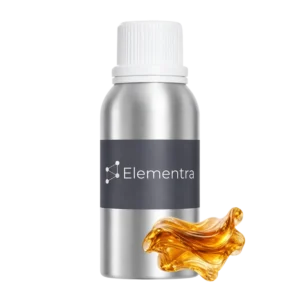
Commercial H4CBD is generally produced by catalytic hydrogenation of CBD and supplied as a high-purity distillate. Its appearance can range from clear or golden to reddish, with a viscous or resinous consistency. By removing CBD’s two non-aromatic double bonds, hydrogenation makes H4CBD less chemically unsaturated and is expected to reduce some oxidation pathways compared with CBD, although direct comparative stability studies remain limited.
H4CBD was first described in 1940 during early research into the hydrogenation of CBD, but received little attention for decades. Interest increased sharply after semi-synthetic cannabinoids entered the commercial market in the early 2020s. Research remains limited, particularly regarding human effects, safety and pharmacokinetics.

How H4CBD works in the human body
H4CBD interacts with the cannabinoid system differently from CBD. It binds CB1 with moderate affinity but shows relatively weak functional activation, resulting in a theoretical psychoactive potency of approximately 0.27x Delta-9-THC. The two H4CBD epimers also behave differently at CB2, with the S form showing notable activation while the R form shows little activity. H4CBD also interacts with several voltage-gated ion channels.
CB1 receptor
The main cannabinoid receptor in the brain, responsible for THC’s intoxicating effects. A mixture of the (R)-H4CBD and (S)-H4CBD epimers binds CB1 with a Ki of approximately 145 nM, compared with approximately 40.7 nM for Delta-9-THC. This gives H4CBD about 0.28x the CB1 binding affinity of Delta-9-THC.
Binding does not necessarily mean that the receptor is strongly activated. Functional testing found that both H4CBD epimers remained below 2% CB1 activation, while Delta-9-THC produced approximately 7 to 9% activation in the same assay. This places H4CBD’s functional activity at less than approximately 0.22 to 0.29x that of Delta-9-THC, with an average upper estimate of about 0.27x.
For the theoretical potency estimate, CB1 binding gives 0.28x and functional activity gives an upper estimate of approximately 0.27x. Averaging these two measures, gives H4CBD a theoretical psychoactive potency of approximately 0.27x Delta-9-THC. This estimate has not been confirmed in controlled human studies.
CB2 receptor
CB2 receptor
The main cannabinoid receptor in the immune system, involved in regulating immune cell activity and inflammatory responses. Functional testing found a clear difference between the two H4CBD epimers.
S-H4CBD showed notable CB2 activation and was the strongest CB2 activator among the semisynthetic cannabinoids tested, while R-H4CBD showed no significant CB2 activation. This suggests that the S form likely contributes more strongly to CB2-related immune or inflammatory effects.
An exact CB2 binding value has not yet been established for H4CBD.
Voltage-gated ion channels
Voltage-gated ion channels help control electrical signalling in nerves, muscles and the heart. Laboratory testing found that H4CBD can inhibit hERG potassium channels, CaV1.2 calcium channels and NaV1.5 sodium channels.
At 1.25 µM, H4CBD reduced activity by approximately 65% at hERG, 37% at CaV1.2 and 28% at NaV1.5 under the tested conditions.
These channels are particularly important for electrical activity in the heart. Inhibition could potentially alter cardiac electrical signalling and heart rhythm, although the significance of these effects at realistic human H4CBD concentrations is unknown and cardiovascular effects have not been established in humans.
Metabolism
Human research has identified several H4CBD metabolites after oral consumption. These include hydroxylated and carboxylated H4CBD metabolites. Several specific COOH-H4CBD and OH-H4CBD metabolites have been detected in human urine. None of these metabolites have yet been confirmed as pharmacologically active.
H4CBD interactions with other compounds
H4CBD can interact with other cannabinoids, common substances and medicines by changing their metabolism, blood exposure or biological effects. These interactions may increase, decrease or modify the effects of either compound, and can sometimes change how long those effects remain active in the body. Their strength and relevance can vary substantially depending on the specific combination, dose and route of administration.
Important disclaimer
This information is provided for educational and technical reference only. Interaction data can change as new research becomes available and may be incomplete or outdated. The real relevance of any interaction depends strongly on dose, route of administration, timing, formulation and individual metabolism. Readers should do their own research and consult a qualified healthcare professional before making decisions involving medicines, alcohol, nicotine, cannabinoids or other compounds. Elementra's products and information are intended for research, production and technical use only and are not intended for human consumption.
No Known Interactions Identified
Current Evidence
Limited Data
No sufficiently supported specific interactions between H4CBD and other cannabinoids, common substances or medicines have currently been identified. H4CBD-specific research has not yet established that another compound meaningfully changes its exposure or effects, or that H4CBD meaningfully changes the exposure or effects of another compound. This should not be interpreted as H4CBD having no interactions. Interactions may exist, but they have not yet been identified or characterized by research.
Related terms
Educational information only
This content does not constitute advice
All information in the Cannabinoid Knowledge Hub is provided solely for educational and scientific purposes. It does not constitute medical advice, usage advice, dosage guidance or instructions for mixing, combining or consuming substances.
Discussions of effects, interactions and risks are descriptive only and should not be interpreted as a recommendation or encouragement to use or combine any substance. Visitors are responsible for complying with all applicable laws and regulations in their country or jurisdiction. Nothing in the Knowledge Hub may be used to support illegal activity.
Read the full disclaimer