
Usage
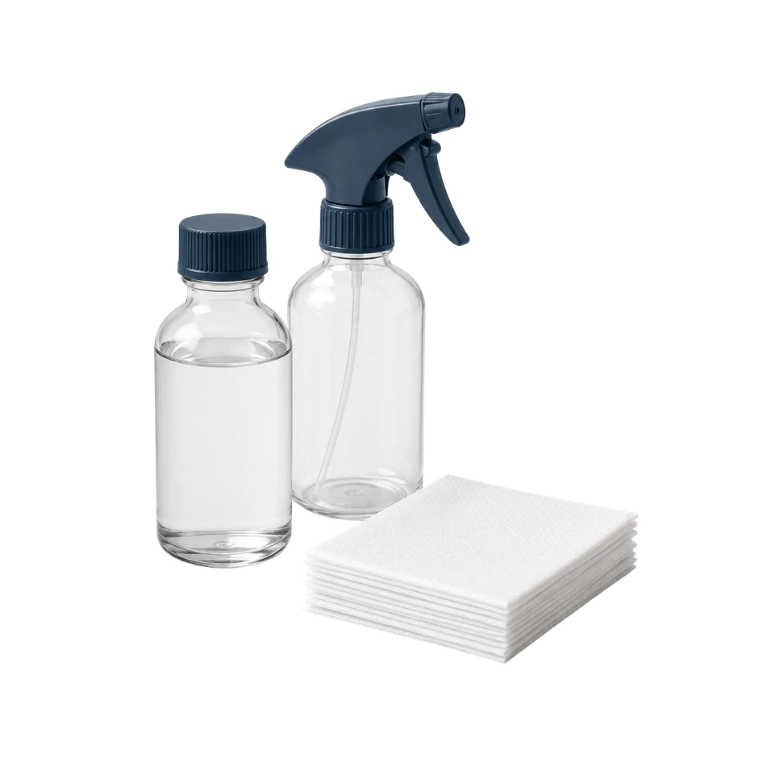
Cleaning supplies are used throughout cannabinoid and terpene processing to remove sticky distillates, oils, terpene residues and other contamination from equipment and work surfaces.
Temperature makes a major difference when cleaning cannabinoid materials. Warm distillates have a much lower viscosity and are therefore considerably easier to wipe, pour or scrape away than material that has cooled and hardened. Equipment is commonly cleaned while it is still warm enough to keep the residue fluid, without being so hot that cleaning materials or solvents become unsafe to use.
For larger amounts of residue, simple absorbent materials such as paper kitchen towel work very well. Most of the remaining distillate can first be wiped away while it is warm. This prevents unnecessary amounts of cleaning solvent from being used on material that could have been removed directly.
Cleaning alcohol is then useful for removing the final oily film and smaller residues that remain on the surface. Isopropyl alcohol is generally the preferred option because it dissolves cannabinoid and terpene residues effectively and evaporates quickly. Other suitable cleaning alcohols can also work, provided they do not contain fragrances, oils or other additives.
For equipment that comes into direct contact with formulations, very high purity alcohol is preferred, approximately 99.9% or higher. The alcohol should be allowed to evaporate completely before the equipment is used again.
Different cleaning formats are useful for different applications. Alcohol prep pads work well for small tools and surfaces, lint-free wipes or paper towels are practical for larger equipment, and a separate syringe can be used to flush alcohol through narrow pathways.
Advantages
Combining heat, absorbent wipes and alcohol makes sticky cannabinoid residue much easier to remove
Low-cost cleaning supplies can be used for most routine laboratory cleaning
Different formats such as paper towels, prep pads and syringes make it possible to clean both large surfaces and narrow pathways
Disadvantages
Cleaning solvents can damage some plastics, coatings and surface finishes
Specification notes
High-purity isopropyl alcohol preferred for final cleaning
Approximately 99.9% purity or higher preferred for equipment that comes into direct product contact
Alcohol free from fragrances, oils, dyes and other unnecessary additives
Safety notes
Cleaning alcohol is highly flammable and is kept away from hotplates, flames, sparks and other ignition sources
Warm equipment can make cannabinoid residue easier to remove, but alcohol should only be applied after the equipment has cooled sufficiently to avoid ignition
Enough ventilation should be used when working with cleaning alcohol
Product-contact equipment should be completely dry and free of residual alcohol before formulation work resumes