
Usage
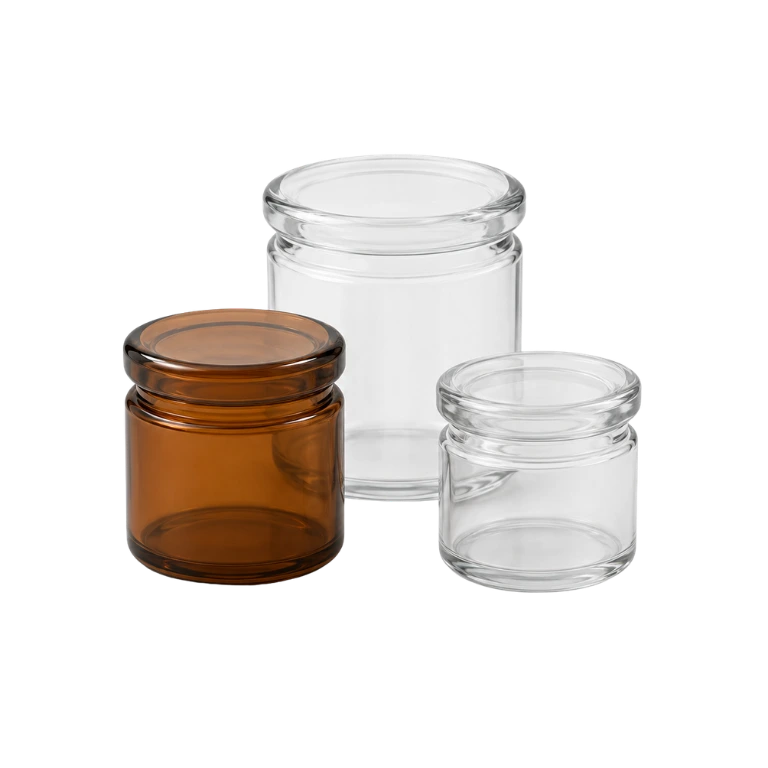
Storage jars are used to hold cannabinoids, terpenes and prepared formulations between processing steps or during storage. Glass jars are commonly used because they are easy to inspect, clean and reuse.
The jar size is usually matched as closely as practical to the amount of material being stored. A container with excessive empty space leaves more oxygen in the headspace, which increases exposure to air. This is especially relevant for terpene-containing formulations and oxidation-sensitive cannabinoids.
For better protection, the headspace can be displaced with an inert preservation gas such as argon before the jar is closed. A reliable lid or seal remain important to limit fresh air from entering again and to reduce loss of volatile terpenes.
Borosilicate glass is especially useful when the stored material is regularly warmed before transfer because it tolerates repeated temperature changes better than standard glass.
Advantages
Low-cost and reusable solution for storing formulations
Sealed jars protect material from contamination and reduce exposure to outside air
Transparent glass makes the material, remaining quantity and possible crystallization easy to inspect
Available in many sizes, making it possible to reduce unnecessary headspace
Disadvantages
Glass containers can break if dropped or exposed to excessive shock
Material can remain around the threads and lid during transfer
Material suitability
Specification notes
Airtight or highly effective lid/seal that limits air exchange after closing
Capacity appropriate for the amount of material being stored to avoid excessive headspace
Material compatible with cannabinoids, terpenes and the intended storage or warming temperature
Wide opening that allows viscous material to be transferred and removed easily
Safety notes
Glass jars should be inspected for cracks, chips or other damage before being heated or used
Closed containers should not be strongly heated while completely sealed because pressure can build as the contents and trapped gases warm
Cold glass should not be exposed directly to strong heat to avoid temperature shock
Jars used for different formulations should be thoroughly cleaned and fully dried before reuse to avoid cross-contamination