
What is Fenchol?
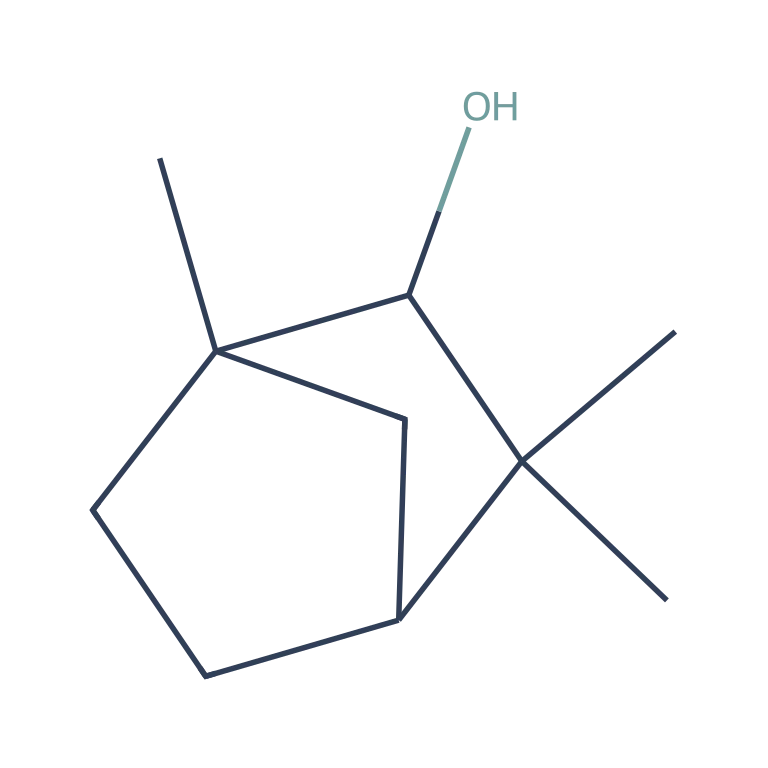
Fenchol is a naturally occurring terpene with the molecular formula C10H18O. It has a compact structure made up of two connected carbon rings and contains an alcohol group, placing it within the monoterpene alcohol family.
Fenchol can occur in several different forms that contain the same atoms but differ in their three-dimensional arrangement. These forms can have slightly different physical and biological properties.
Reported effects
Research on Fenchol is still limited and has focused mainly on models of age-related neurological decline. Current evidence suggests that it may support cognitive function by protecting nerve cells and improving the removal of harmful protein buildup.
Cognitive support
Preclinical studiesFenchol has reduced Alzheimer's-like changes in cell, worm and mouse models. It protected nerve cells from amyloid-beta toxicity, reduced amyloid-beta accumulation and prevented decline in cognitive-related behaviour in experimental models.
Molecular targets
FFAR2 is currently the best supported molecular target of Fenchol. Functional experiments show that Fenchol activates FFAR2 signalling in neuronal cells, although direct receptor binding has not yet been fully characterized.
FFAR2
FFAR2, also known as GPR43, is a receptor that normally responds to short-chain fatty acids produced by the gut microbiome. It is involved in metabolic, immune and gut-brain signalling.
Fenchol was identified as an FFAR2 activator after screening more than 144,000 natural compounds. In human neuronal cells, it increased signalling associated with FFAR2 activation, including ERK1/2 activity and intracellular calcium, while reducing cAMP.
Fenchol also reduced amyloid-beta accumulation and protected neuronal cells from amyloid-beta toxicity. These protective effects were reduced when FFAR2 signalling was blocked, providing strong functional evidence that FFAR2 is important for its activity.
Computer modelling predicts that Fenchol can bind within the FFAR2 receptor, but direct receptor-binding measurements are still lacking. It is therefore best described as a functionally supported FFAR2 agonist rather than a fully characterized direct ligand.