
What is α-Pinene?
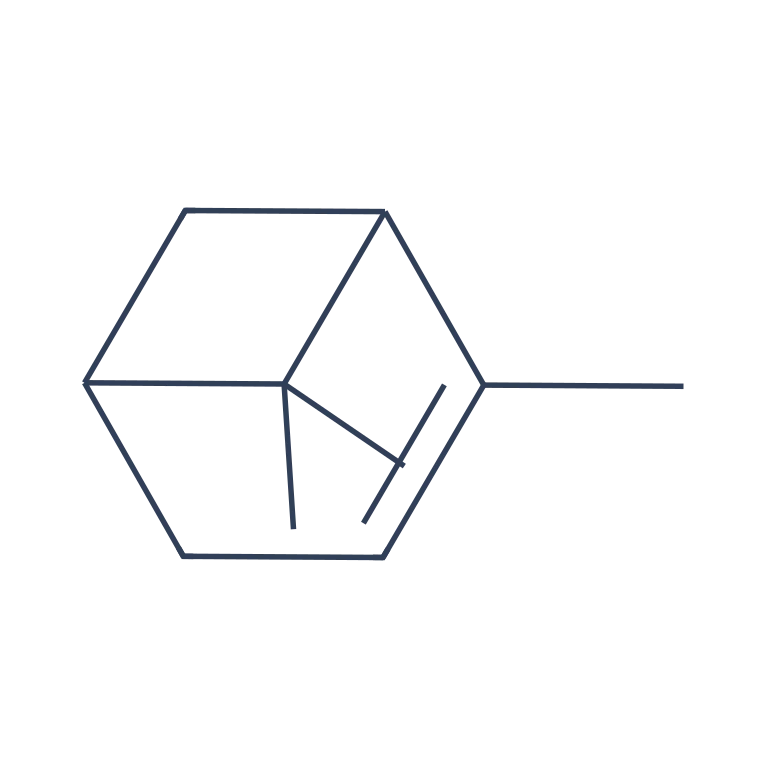
α-Pinene is a naturally occurring terpene with the molecular formula C10H16. It has a compact structure made up of two connected carbon rings, making it structurally different from open-chain terpenes such as β-Myrcene.
α-Pinene exists in two mirror-image forms, known as (+)-α-Pinene and (-)-α-Pinene. Both occur naturally, but their proportions vary between plant species and they can behave differently in some biological tests.
Reported effects
α-Pinene has shown several behavioural effects in animal studies. Some results appear to depend on concentration, exposure time and route of administration, which may explain why both calming and more stimulating effects have been reported.
Calming
Animal studiesInhaled α-Pinene has reduced anxiety-like behaviour in mice and rats. Repeated inhalation also maintained this calming effect over several days without a clear loss of response.
Uplifting & energizing
Animal studiesAt certain concentrations, inhaled α-Pinene has increased movement and activity in mice. Higher brain levels were also associated with changes in dopamine-related signalling, suggesting that its effects can become more stimulating under some conditions.
Sedating
Animal studies(-)-α-Pinene increased non-REM sleep and shortened the time required to fall asleep in mice. This effect was linked to increased GABA-A receptor signalling in the brain.
Cognitive support
Animal studiesα-Pinene has improved learning and memory performance in several animal models involving chemically induced memory problems, inflammation and neurological damage. Controlled human evidence is not yet available.
Molecular targets
The clearest direct molecular target identified for α-Pinene is the GABA-A receptor, which plays an important role in inhibitory signalling and sleep regulation in the brain.
GABA-A receptor
GABA-A is one of the main inhibitory receptors in the brain. Increasing its activity reduces the ability of nerve cells to become activated.
(-)-α-Pinene acts as a positive modulator of GABA-A signalling at the benzodiazepine binding site. Brain-slice experiments showed that it prolonged GABA-A-mediated inhibitory signals between nerve cells.
In mice, (-)-α-Pinene increased non-REM sleep and shortened the time required to fall asleep. Blocking the benzodiazepine site with flumazenil prevented these effects.
Together, these findings provide strong evidence that the GABA-A receptor is a direct molecular target of α-Pinene.